Thank you for joining us!
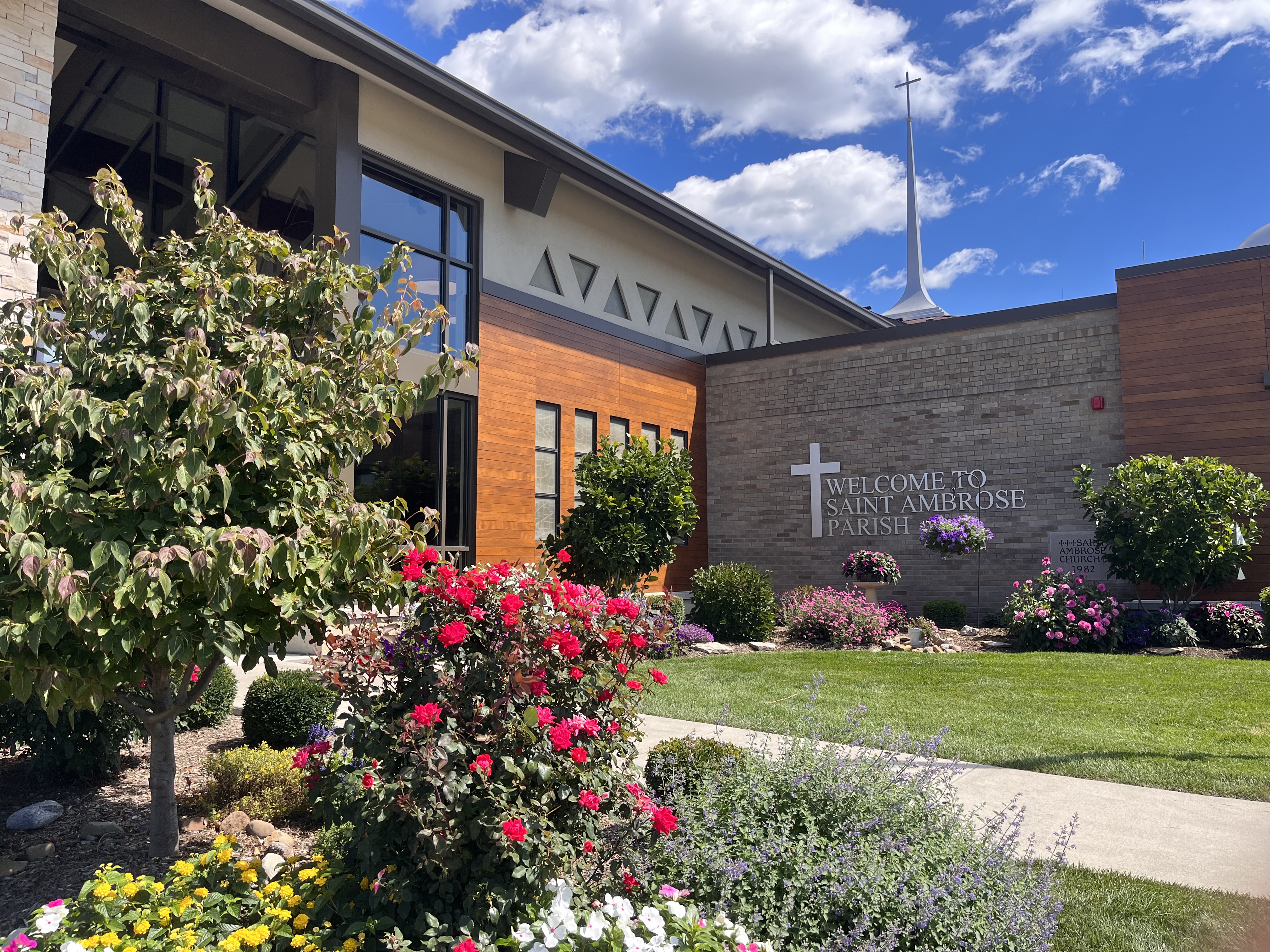
We are grateful to have you at Saint Ambrose! Our parish is a vibrant community of faith, and we welcome you with open arms.
Join Our Parish
We welcome you to join our parish community, to grow in faith, and to be part of the Saint Ambrose family.
Update Parishioner Contact Info
How Can We Serve You?
Our parish community is here for you. Please complete the form below.
OUR MISSION STATEMENT
We are a Catholic community of faith, centered on Jesus Christ, who is everything for us.
SAINT AMBROSE
About our Parish
Since its founding in 1957 to this very day, hundreds and thousands consider Saint Ambrose a part of 'their family.' Through over 150 ministries and programs, its members form wonderful bonds of friendship, reinforce family values and do great work in service to the Lord and our local community.
There is something for everyone at Saint Ambrose. As a community of faith, the parish works hard to respond to those in need. Its efforts provide food for the hungry, support for those who are grieving the loss of a loved one, friendship and encouragement for those who are struggling with the pain of divorce, and so much more.
We are blessed to have such a vibrant parish life at Saint Ambrose! If you are in need, or looking for a Church 'family' and a spiritual home, Saint Ambrose Parish is a welcoming place for you – all of us, together, as one family in the Lord.
Better Together
Collaboration
You Belong Here
Community
Love in Action
Care and Compassion
Find Joy Together
Celebration
Transformed by Truth
Catechesis and Conversion
OUR CORE VALUE
Guided by Christ, we live our faith through prayer, compassion, and community.
THE SEVEN CORE PRINCIPLES
Basic Principles of Catholic Social Teaching
These principles provide a moral framework for life in society and guide us in creating conditions that allow people to reach their God-given potential.
Life and Dignity of the Human Person
The Catholic Church believes that human life is sacred, and that the dignity of the human person is the foundation of a moral society.
The Catholic Church believes that human life is sacred, and that the dignity of the human person is the foundation of a moral society. This belief is the foundation of all the principles of our social teaching. In our society, human life is under attack from abortion and euthanasia; it's being threatened by cloning, embryonic stem cell research and the use of the death penalty. The intentional targeting of civilians in war or terrorist attacks is always wrong. And that war is a last resort... IF at all... Nations must protect the right to life by finding increasingly effective ways to prevent conflicts from ever reaching their most violent means. We believe that every person is precious, that people are more important than things, and that the measure of every institution is whether it threatens or enhances the life and dignity of the human person.
Scripture References
John 4:1-42 Luke 10:25-37 Romans 12:9-18
Questions for Reflection
What do you think causes terrorism and the devaluation of human life in general?
Call to Family, Community, and Participation
The person is not only sacred but also social. How we organize our society — in economics and politics, in law and policy — directly affects human dignity.
The person is not only sacred but also social. How we organize our society — in economics and politics, in law and policy — directly affects human dignity and the capacity of individuals to grow in community.
Rights and Responsibilities
The Catholic tradition teaches that human dignity can be protected and a healthy community can be achieved only if human rights are protected and responsibilities are met.
The Catholic tradition teaches that human dignity can be protected and a healthy community can be achieved only if human rights are protected and responsibilities are met.
Option for the Poor and Vulnerable
A basic moral test is how our most vulnerable members are faring. In a society marred by deepening divisions between rich and poor, our tradition instructs us to put the needs of the poor and vulnerable first.
A basic moral test is how our most vulnerable members are faring. In a society marred by deepening divisions between rich and poor, our tradition instructs us to put the needs of the poor and vulnerable first.
The Dignity of Work and the Rights of Workers
The economy must serve people, not the other way around. Work is more than a way to make a living; it is a form of continuing participation in God's creation.
The economy must serve people, not the other way around. Work is more than a way to make a living; it is a form of continuing participation in God's creation.
Solidarity
We are one human family whatever our national, racial, ethnic, economic, and ideological differences. We are our brothers and sisters keepers, wherever they may be.
We are one human family whatever our national, racial, ethnic, economic, and ideological differences. We are our brothers and sisters keepers, wherever they may be.
Care for God's Creation
We show our respect for the Creator by our stewardship of creation. Care for the earth is not just an Earth Day slogan, it is a requirement of our faith.
We show our respect for the Creator by our stewardship of creation. Care for the earth is not just an Earth Day slogan, it is a requirement of our faith.
GET INVOLVED IN OUR MINISTRIES
Be part of a community that serves, supports, and grows together in faith.
Join Our Ministries
Stewardship
Join Our Ministries
Women's Ministry
Join Our Ministries
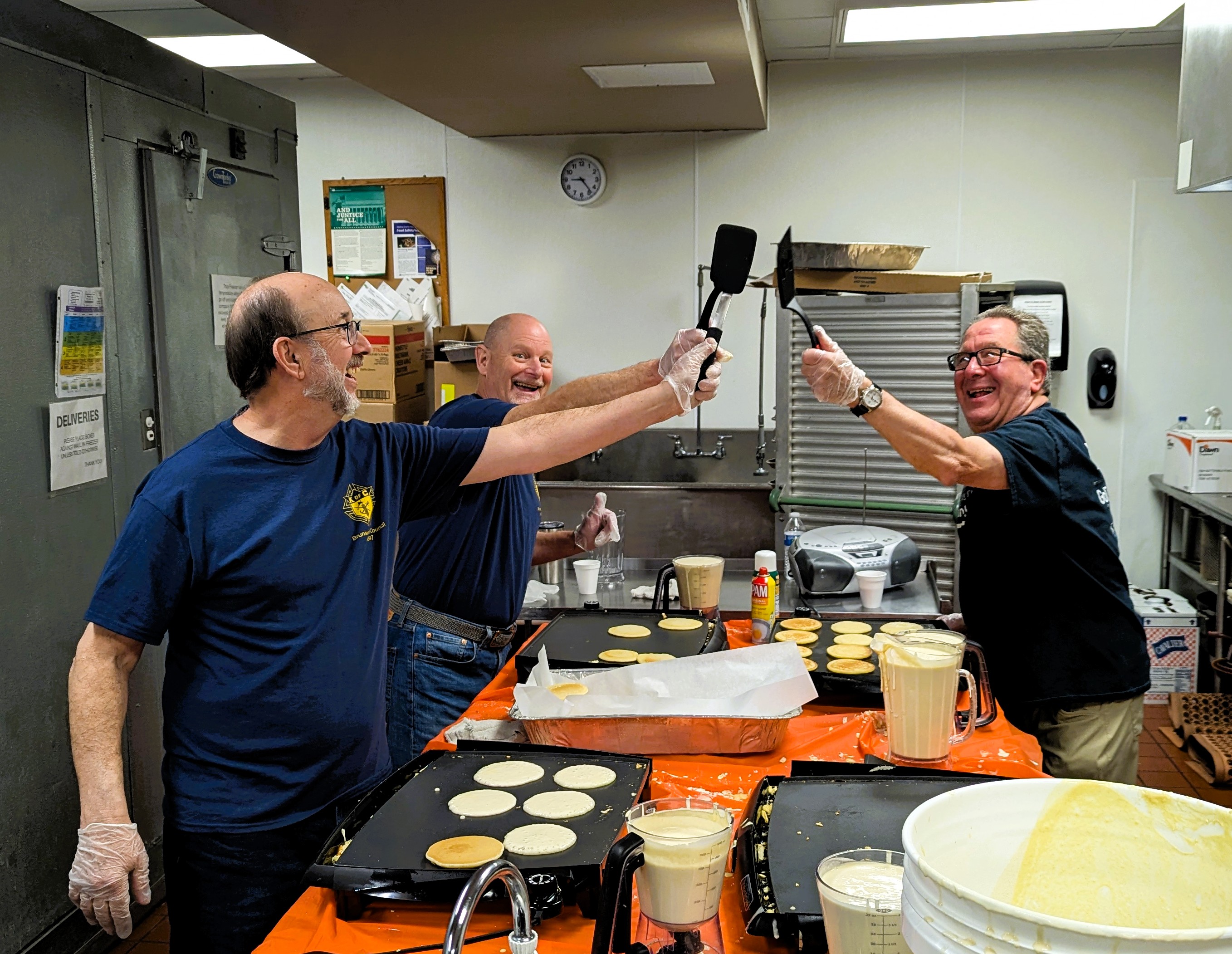
Men's Ministry
Join Our Ministries
Youth & Young Adults
Join Our Ministries
Children & Family Life
Join Our Ministries
Senior Ministry, Route 66
Join Our Ministries
Liturgical Ministry
Join Our Ministries
Teaching & Learning
Join Our Ministries
Service & Outreach
Join Our Ministries
Sports & Recreation
VOLUNTEER
It is only through the generosity of our parish family that we are able to provide all the ministries and services that we do.
Learn MoreKINGDOM BUILDERS
We are Building His Kingdom!
Over the past few months, our parish leaders have been highly engaged in many conversations about the charisms and qualities of our parish community. In so many ways, these efforts resonate with Saint Paul's letter to the Ephesians. These parish charisms articulate the ways we are called to live and act as a community of faith centered on Jesus Christ.
We Welcome with Joyful Hospitality
- Deepen our faith through prayer
- Greet with a smile and warm welcome
- Ask meaningful questions to build connections
- Always invite others and learn their names
- We are family - make everyone feel at home
We Serve with the Compassion of Christ
- Serve with genuine love and care
- Care for the vulnerable in our community
- Act with mercy and understanding
- Bring hope to others through our actions
- Follow Christ's example in all we do
We Inspire with Prayer and Worship
- Deepen our faith through prayer
- Celebrate together in worship
- Seek God daily in all things
- Inspire reverence and devotion
- Connect with the divine presence
We Give Thanks with a Grateful Heart
- Give thanks always in all circumstances
- Celebrate blessings great and small
- Recognize God's gifts in our lives
- Share our abundance with others
- Live in gratitude daily
We Engage and Empower Others
- Build up others through encouragement
- Share our gifts and talents freely
- Encourage active participation in community life
- Foster leadership at all levels
- Grow together in faith and action
LEARNING ABOUT OUR CHURCH
Sacred Symbols & Traditions
Discover the rich meaning behind our Catholic traditions, symbols, and sacred spaces.
Basket Blessing
In many Eastern European families, it is a tradition to have a basket of food blessed on Holy Saturday or Easter Sunday. In Poland, for example, the blessing of the baskets is known as święcenie pokarmów wielkanocnych, a practice dating to the 15th century or earlier.
Traditional Foods
Priest Vestments
The Church's liturgical norms prescribe specific vestment colors for various celebrations. Colors highlight the particular liturgical season, feast, or the faithful's journey through these seasons.
Purple
Originally associated with royalty because it was a more expensive color to dye. Over time, it became associated with penance.
White
Symbolizes purity, joy, light, glory. Used during the Christmas and Easter seasons; Holy Thursday; weddings; and other joyful occasions.
Green
Symbolizes hope. Used during Ordinary Time, a season dedicated to growth in everyday faith.
Rose
Symbolizes anticipation, rejoicing. Used on Gaudete Sunday (third Sunday of Advent) and Laetare Sunday (fourth Sunday of Lent).
Red
Symbolizes blood, fire and passion. Used on Palm Sunday, Good Friday, Pentecost Sunday, and feasts of martyred saints.
Black
Symbolizes death and mourning. May be used at funeral Masses, the feast of All Souls or the anniversary of the death of a loved one.
Stained Glass
"Light is a common spiritual theme in Christian theology. In Genesis God's first words at creation were, 'Let there be light,' and Jesus said in John 3, 'God was light, and in that light was good' (Genesis 1:3-4). Jesus himself is even identified with light, saying, 'I am the light of the world; he who follows me will not walk in darkness, but will have the light of life'" (John 8:12).
With this in mind it is fitting for Christians to spend much time and energy developing the design of windows in churches. The windows themselves are wonderful works of art, depicting the darkness of the past and shadows. Architects saw them as the perfect opportunity to highlight a spiritual truth while serving a functional purpose.
Stained windows not only served the spiritual purpose of bringing to mind how the light of God shatters our darkness, but also proved to be an important catechetical tool. During the medieval period that stained glass windows became a popular way to view the many stories of the Bible.
The windows of the church offer hope, illuminate the imagination of the people and how every generation of our world. Stained glass windows are some of the most beautiful treasures of Christian churches and are there to inspire us today.
Celtic Trinity
The Trinity knot is also called the Triquetra (from the Latin for three corners) and is one of the best known symbols in Celtic culture. In the Christian faith, the three points of the Trinity knot represent the Holy Trinity of Father, Son and Holy Spirit.
This symbol was also chosen for our church building because it reminds us that we are many parts in one body. Just as the living stones that make up the Church of Jesus Christ, we are made one through the Death and Resurrection of Christ. Together we are the body of God.
Mary Shrine & Statues
Catholics do not worship idols, but have a long tradition of using statues in our churches. Thousands of years ago, people were not able to read, and stained glass windows could help visually tell the stories in the bible and show what people looked like.
Catholics honor Mary and the saints to preserve their memory. Catholics often decorate statues of Mary with flowers in her honor. Just as we leave flowers at someone's grave, we do not think the deceased is there, because they are alive in Heaven.
Remember the saying, "Out of sight, out of mind." As Catholics, we want to make sure that our faith can NEVER be out of sight or out of mind, but be forever enduring in our hearts, and in our every day lives.
Music & Song
The importance of music in biblical religion is shown very simply by the fact that the verb "to sing" (with related words such as "song") is one of the most commonly used words in the Bible. It occurs 309 times in the Old Testament and thirty-six in the New.
The singing of the Christian comes ultimately from love. It is the utter depth of love that makes the singing "Cantare amantis est," says St. Augustine, singing is a lover's thing.
Liturgical music rises up out of love and is a gift from the Spirit who draws us into love for Christ and so leads us to the Father.
Music in the liturgy chiefly serves as the exultant expression of thanksgiving, bringing with it the joy of being loved.
Holy Water & Fonts
The rite of holy water and its fonts evokes, primarily, three things. First, the blessed water reminds Christians of their Baptism. By sprinkling ourselves with holy water, we remember that we are "temples of the Holy Spirit" (I Corinthians 6:19).
Second, holy water is what the Church calls a "sacramental." These are sacred signs which bear a resemblance to the sacraments.
Third, locating the holy water fonts at the entrance to our churches symbolizes the difference between ordinary space and sacred space. The transition from normal business into the special activity of divine worship.
Tabernacle
The tabernacle is a liturgical furnishing used to house the Eucharist outside of Mass. This provides a location where the Eucharist can be kept for the adoration of the faithful as well as for later use. The word tabernacle means "dwelling place."
The use of a tabernacle in Catholic churches rests solely on the doctrine of the Real Presence of Christ in the Eucharist.
Without the Eucharist, the tabernacle is simply an empty gold box.
Candles
The word "candle" comes from the Latin verb candeo, meaning "to shine, glow, or burn." Candles have always been used in the liturgy as a symbol of joy and the Light of Christ.
Candles in the Catholic Church are traditionally made of beeswax. According to the Catholic Encyclopedia, "The pure wax extracted by bees from flowers symbolizes the pure flesh of Christ received from His Virgin Mother, the wick signifies the soul of Christ, and the flame represents His divinity."
The Church, in her beauty, uses candles and how they can reignite a drooping spirit and fill it with the fire of divine love.
Sanctuary
Sanctuary is a word derived from the Latin sanctuarium, which is a container for keeping something in—in this case holy things or cherished people.
In the Roman Catholic Church the sanctuary is the area of the church where the altar, the ambo, and the celebrant's chair are located. This is the place where the priest, the deacon and other ministers exercise their offices.
The General Instruction of the Roman Missal defines the sanctuary as "the place where the altar stands, where the word of God is proclaimed, and where the priest, the deacon and the other ministers exercise their offices" (No. 295).
Altar
The altar is the table on which the Sacrifice of the Mass is offered. One or more relics of martyrs, or other saints, are commonly set into the altar. The Catechism of the Catholic Church states plainly that the "Christian altar is the symbol of Christ himself, present in the midst of the assembly of his faithful" (CCC 1382).
Because of this truth the altar is given the most prominent location in a church, occupying a place which is truly the center toward which the attention of the whole congregation of the faithful naturally turns. This is also why the priest and deacon kiss the altar at the beginning and end of Mass.
Our new altar will also follow an ancient custom of the Church of having five carved crosses (one in each corner and one in the center) in the top of the altar to represent the five wounds of Jesus Christ.
The stone for the altar arrived this week! It is in the church, acclimating to the warmer temperature and will be installed this coming week! It's exciting to see it all come together!
Baptismal Font
The Sacrament of Baptism is one's entrance in the Body of Christ, the Family of the Church. Through this sacrament we follow Christ's command to baptize all nation's in the name of the Father, and of the Son, and of the Holy Spirit (Matthew 28:19).
Through either the pouring of water or immersion in it, the person is washed clean of original sin and made a dwelling of the Holy Spirit.
The stone for our baptismal font arrived a few weeks ago to Norbert Koehn's workshop in South Euclid. He is still in the delivery to St. Ambrose in a few weeks!
Ambo
A word of Greek origin, supposed to signify a mountain or elevation. The same connection alludes to Our Blessed Lord preaching from a mountain: "He went up into a mountain--and opening the mouth he taught them" (Matthew 5:1-2).
Ambos are believed to have taken their origin from the raised platform from which the Jewish rabbis read the Scriptures to the people.
Our new ambo at St. Ambrose will be a stunning, strong, permanent structure to proclaim God's Holy Word and intercede on behalf of God's Holy People.
Bells
Since the earliest days of the Church, bells have been used to call the faithful to prayer and remind them of their heavenly vocation.
Church bells call us to prepare for Masses, toll in remembrance of the faithful dead at a funeral and proclaim moments of celebration and joy such as weddings and special feasts.
Our new system at St. Ambrose will also allow us to continuing playing hymns throughout the day in thanksgiving to God for his goodness.
Processional Cross
The Processional Cross, also called a processional crucifix, is a familiar object to most of the Catholic faithful. It is carried at the front of the procession.
The use of processional crosses in the Liturgy dates back several centuries, and the origin of this tradition is commonly credited to St. Augustine of England who died in 604.
It is carried at the front of the procession, and the figure on it should be facing forward so that the procession is moving with Christ.
Crucifix
For Catholics, the crucifix plays a special role in the liturgical tradition of the Church. The Church requires that a crucifix be visible during the celebration of Mass to remind us of the sacrifice of Jesus on the altar of the cross.
When some type of suffering comes our way, the image of the crucifix will help us recall and imagine the spiritual impact. The crucifix is a visual reminder of Christ's battle over sin, a battle in which He is the Victor!
What thoughts go through your mind when you look at the image of the crucifix? We know what Christ was hoping about us!
On some crucifixes a skull and crossbones are shown below the corpus, referring to Golgotha (Calvary), the site at which Jesus was crucified.
Stations of the Cross
The Stations of the Cross or the Way of the Cross, also known as the Way of Sorrows or the Via Crucis, refers to a series of images depicting Jesus Christ on the day of his crucifixion.
The devotion of praying the Stations started with the Franciscan friars in the Holy Land.
The Church Steeple
The spiritual significance of these structures comes straight from the Bible. Steeples were used to remind a local community to remain focused on God.
You couldn't go anywhere in town without seeing the steeple and as a result be reminded about your duty to God – to center our lives on Christ.
The steeple of our Church will be totally removed Friday, October 12, 2018. After 36 years, the steeple is in great need of a complete rebuild.
The Sacristy
A sacristy is a room for keeping vestments and other church furnishings, sacred vessels, and parish records. The word "sacristy" derives from the Latin sacristia. In the sacristy there is a specialized basin called a piscina, the drain of which flows directly into the ground to prevent sacred items from being washed into sewers.
PRAYER
Prayer Requests & Special Intentions
As a community of faith, we are brothers and sisters – one family – in the Lord.
One of the gifts we can give to each other is to hold each other and our special intentions in prayer.
There's a strength and peace that comes when we pray for one another. If you have a special intention or prayer request, please complete the form below. You can either keep this intention private (only shared among our priests and deacons), or you can share this with the entire community so all our members can keep you, your intention, and/or your loved one in prayer.
If you would like to pray for a member of the military, please visit our Ministry to the Military webpage.
Scroll down to see special intentions and prayer requests from those in our community. Please take time to hold them in prayer, as we do each weekend at Mass.
Submit Your Prayer Request
* indicates required fields
Please note, we do not post every request we receive due to the personal nature of certain intentions. If you do not see your intention below, please don't worry – we have received it and are lifting up your request in prayer.
PRAYER
Prayer Requests Submitted Online
Join us in lifting up these intentions from our faith community
Pray for all of those suffering in Israel. Pray for an end to violence.
Prayers for peace and strength for her family during this difficult time.
For me to discern correctly my vocation, I get stressed sometimes thinking I may make a mistake.
I ask with all I am to please pray for my husband who is facing great health issues. He a man of faith and I ask for prayers warriors please. I thank you from the deepest part of my heart.
Praying for my complete healing from my bleeding & surgery. May the biopsy results turn out normal. Heal me, Lord, I beg you.
GENERATIONS OF FAITH PLEDGE
Support Our Church Renovation
Join us in preserving these sacred traditions and symbols by supporting the Generations of Faith campaign. Your pledge helps maintain and enhance our beautiful church for future generations.
MAKE A PLEDGEUPCOMING EVENT
Find Our Upcoming Event and see what's happening this week.
See what's happening this week.
Couples Night Out: Bowling
Couples Night Out: The Back Nine
Faith & Fellowship Group: The Chosen 5
Foundations of Faith - AM
OTHER LATEST VIDEOS
Check Out Our Latest Videos. Watch, Reflect, Connect with Christ
Pause, watch, and let God speak into your everyday life.
OUR TEAM STAFF
Guided by Faith, Serving with Purpose
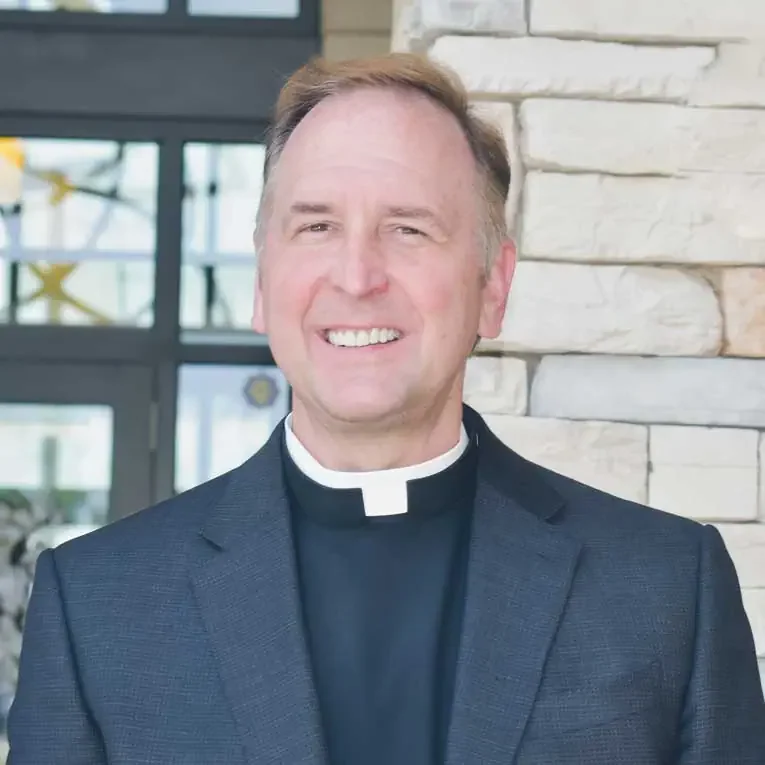
Pastor
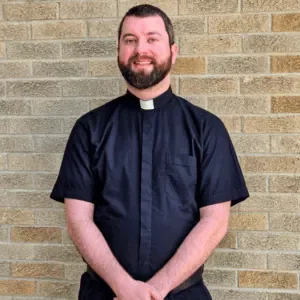
Parochial Vicar
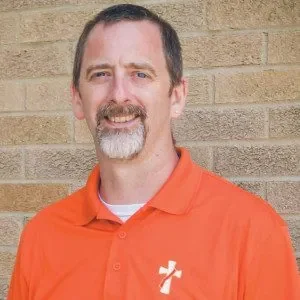
Deacon
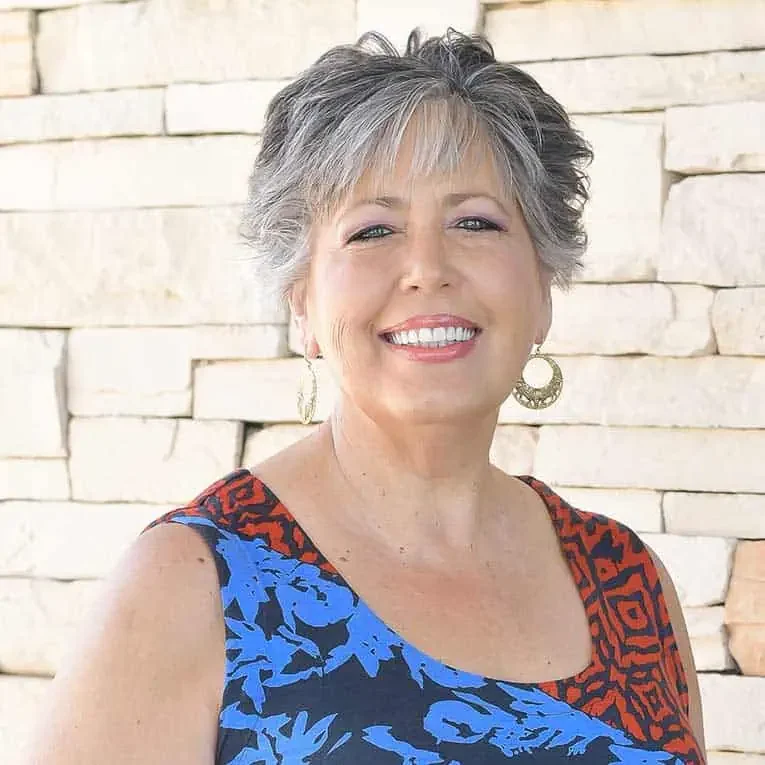
Front Office
FREQUENTLY ASKED QUESTIONS
We're glad you're here.
Below you'll find the answers to some of the biggest questions we receive. Have a question that isn't answered here? Please make sure to contact us so that we can assist you.
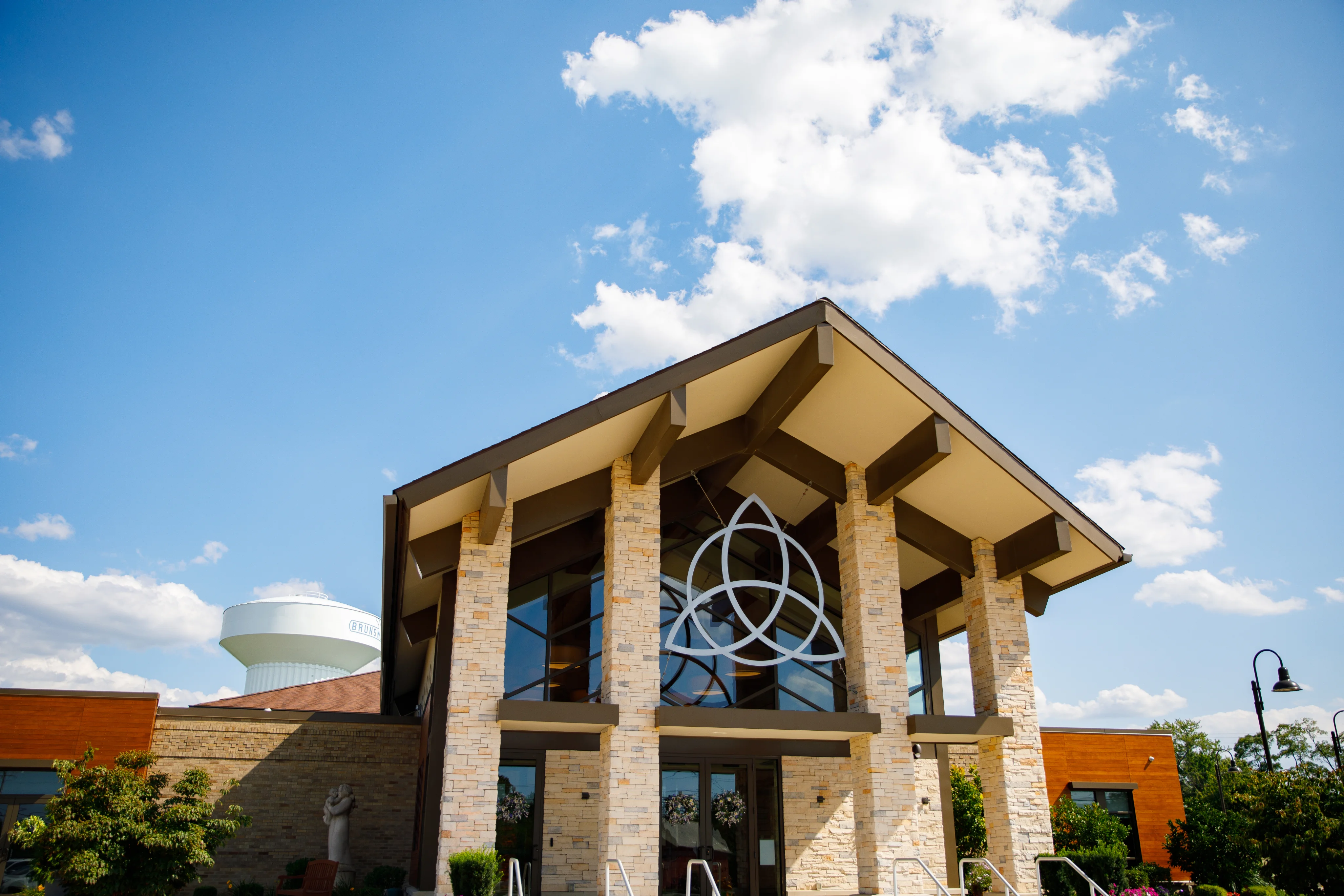
What's the background of your church?
What are your Mass times?
I'd like to become a parishioner at Saint Ambrose. What steps do I need to take?
I'd like to get married at Saint Ambrose. Can you walk me through the process?
I'd like to baptize my child at Saint Ambrose. What steps do I need to take?
I am going to need to schedule a funeral at Saint Ambrose. How may I do so?
I'd like to become Catholic. Can you tell me a little about the RCIA program?
Can you pray for my special intention?
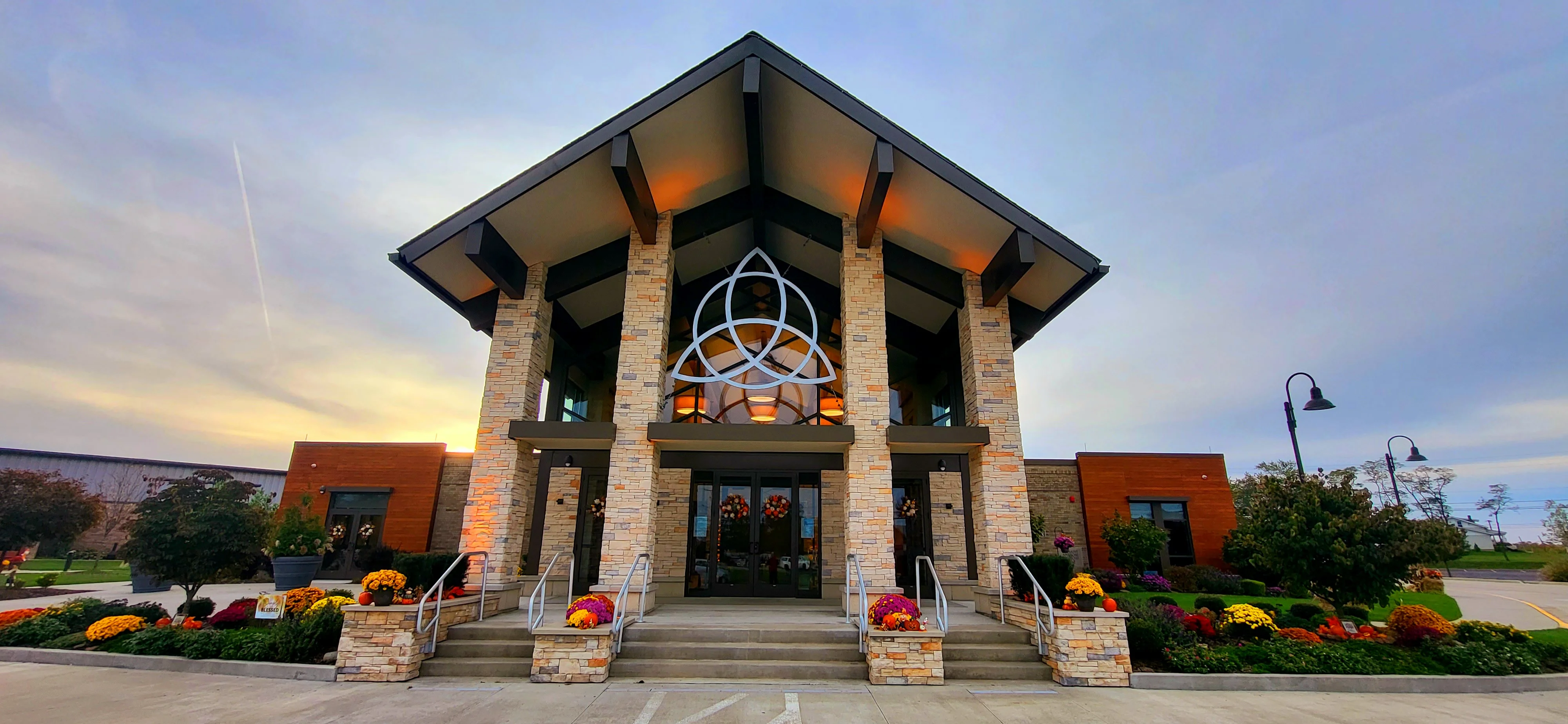
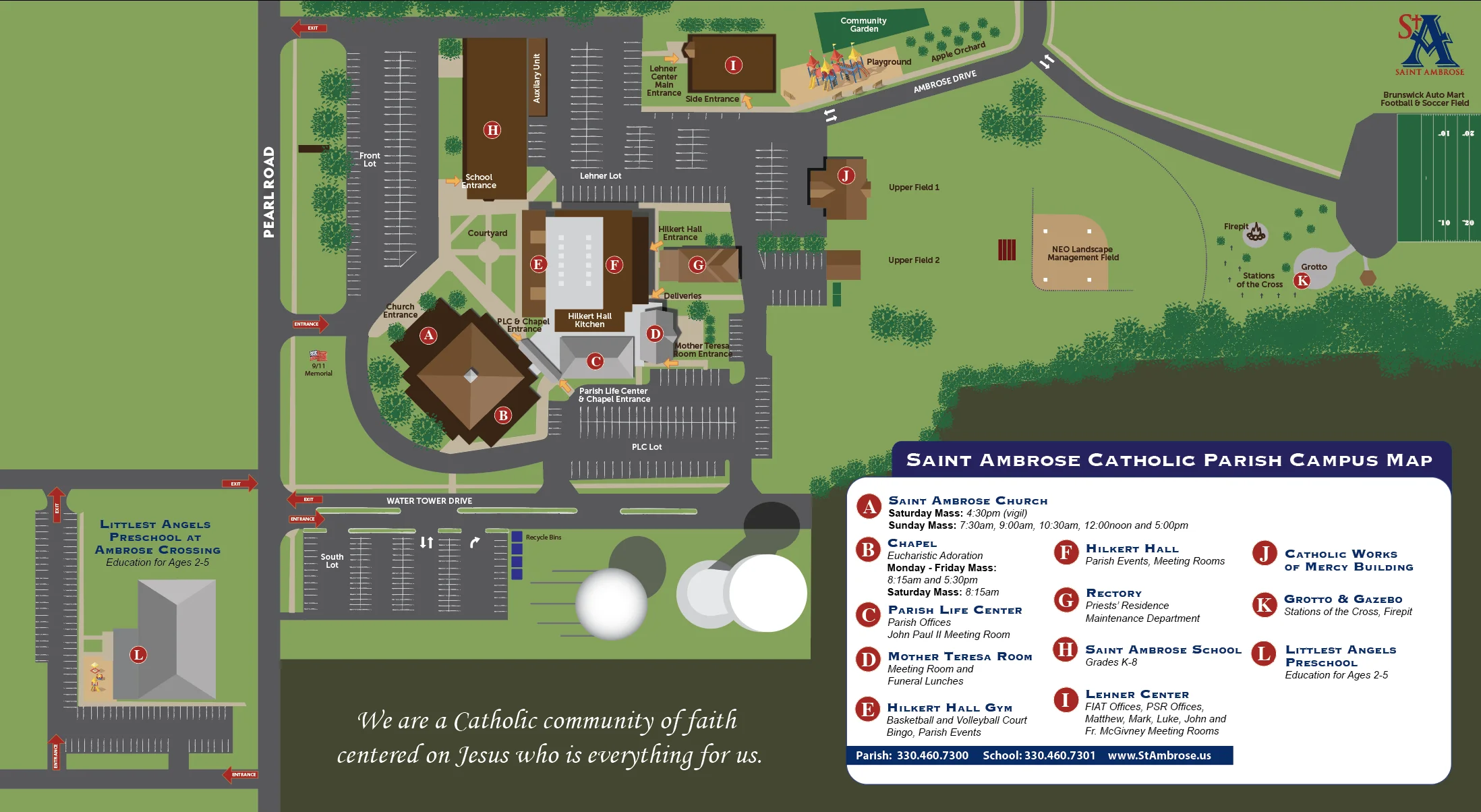
DISCOVER YOUR PLACE ON CAMPUS
Campus Map
Take some time to study our campus map to get familiar with where everything is located on our campus!
OUR PARTNERS
Thank You Community Partners!
Your Involvement in the Saint Ambrose Parish Community Partners Program is a High Value



OUR LOCATION
Plan to Visit Us
Come Experience the Joy of Belonging